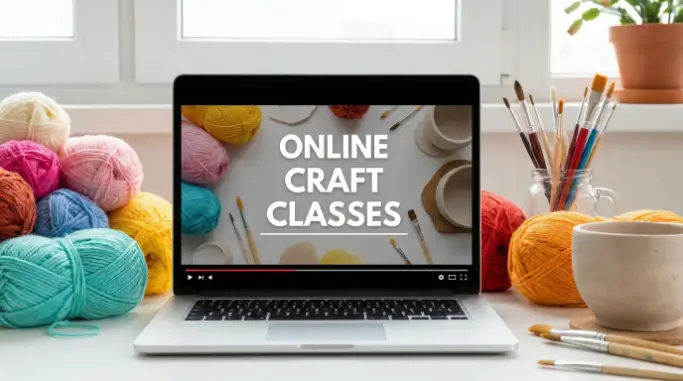
Learning a new craft has never been easier. You no longer need to attend a local class, travel across town, or wait for a workshop to open. With a phone, tablet, or computer and a little free time, you can learn everything from crochet and knitting to painting, paper crafts, jewelry making, sewing, and woodworking from home.
If you have been wondering where to learn crafts online, there are more options today than ever before. The challenge is not finding a craft lesson. It is finding the right place, teacher, course, and learning style for your needs.
Some people prefer short video tutorials that show every step. Others enjoy structured courses where they can start with the basics and gradually move to more advanced projects. There are also free communities where crafters share ideas, mistakes, patterns, and finished projects.
This guide explains the best ways to learn crafts online, what to look for in a good learning platform, and how to choose the right craft when you are just getting started.
Why Learn Crafts Online?
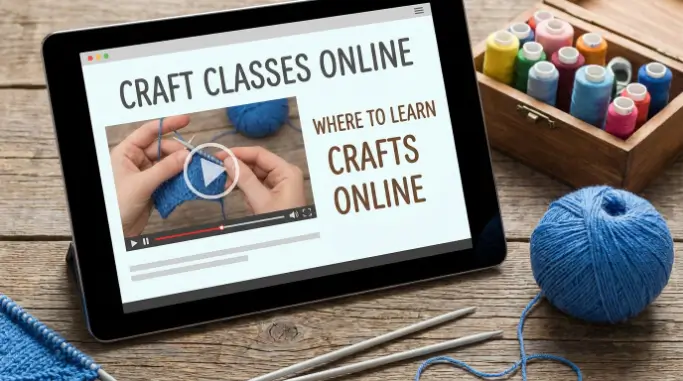
Online craft learning is popular because it gives you freedom. You can learn when you want, at your own speed, without worrying about a fixed classroom schedule.
For someone with a busy job or family responsibilities, this flexibility can make a huge difference. You can watch a ten-minute lesson during a break or spend an entire evening working on a project.
Another advantage is the variety of choices. A local craft class may focus on one or two activities, while online learning can introduce you to hundreds of different crafts.
You can explore:
- Crochet
- Knitting
- Sewing
- Embroidery
- Painting
- Drawing
- Pottery
- Jewelry making
- Paper crafts
- Woodworking
- Candle making
- Home decoration
- Calligraphy
- Clay modeling
- Floral crafts
The best part is that you do not have to become an expert immediately. Online learning makes it easy to start with a simple project and build your skills over time.
Where to Learn Crafts Online for Free
If you are new to crafting, starting with free resources is often a smart choice. You can discover what you enjoy before spending money on equipment or a complete course.
Video Tutorials
Video platforms are among the easiest places to learn crafts online. A good video lets you watch a skilled crafter demonstrate a technique instead of trying to understand written instructions alone.
This is particularly useful for crafts that involve hand movements. For example, seeing someone make a crochet stitch can be much easier than reading a description of the same stitch.
When choosing a tutorial, look for videos that explain the materials, show each step clearly, and use a camera angle that allows you to see the creator’s hands.
Do not worry if the first tutorial you find is not easy to follow. Different teachers explain the same technique in different ways. Sometimes finding another instructor is all it takes for a difficult step to suddenly make sense.
Craft Blogs
Craft blogs are another excellent resource. Many experienced crafters publish detailed instructions with photographs, supply lists, measurements, and helpful tips.
Written tutorials are especially useful when you want to return to a particular step without watching an entire video again.
A good craft blog should explain the project clearly and tell you what materials are required before you begin.
Online Craft Communities
Communities can make learning much more enjoyable. Other crafters can answer questions, recommend materials, and offer suggestions when a project does not turn out as expected.
You may also find people sharing photographs of their finished work. These examples can give you ideas for your own projects and encourage you to keep practicing.
Structured Online Craft Courses
Free tutorials are excellent for individual projects, but structured courses can be better if you want to develop a complete skill.
A structured course usually takes you through several lessons in a planned order. Instead of jumping randomly between beginner and advanced techniques, you build your knowledge step by step.
For example, a beginner sewing course might start with understanding fabric and thread, then move to machine setup, basic stitches, simple seams, and eventually complete clothing or home projects.
This approach can prevent a common beginner problem: trying something too difficult too soon.
What Makes a Good Online Course?
Before enrolling in a course, consider how it is organized.
A strong course should have clear lessons, useful demonstrations, and projects that match your skill level. It should also explain which tools and materials you need.
It is helpful when instructors explain not only what to do but also why a particular technique works.
Good courses may also provide downloadable patterns, project guides, practice exercises, or a community where students can ask questions.
How to Choose the Right Craft
Knowing where to learn crafts online is only half the process. You also need to decide what you actually want to learn.
Think about the type of activity you enjoy.
If you like working with fabric, sewing, embroidery, quilting, and crochet could be good choices. If you enjoy colors and visual creativity, painting or drawing may suit you better.
People who like working with their hands and physical materials might enjoy woodworking, clay, pottery, or jewelry making.
There is no universally best craft. The right one is the activity that makes you want to keep practicing.
Beginner-Friendly Crafts to Try
Some crafts are easier to start than others. If you have never made anything by hand before, choose a project that does not require expensive equipment.
Crochet
Crochet is a popular beginner craft because you only need a hook, yarn, and basic instructions to get started.
Once you understand a few basic stitches, you can make scarves, small decorations, bags, blankets, and many other projects.
Paper Crafts
Paper crafts are another inexpensive option. You can begin with paper, scissors, glue, and a few basic tools.
Origami, paper flowers, greeting cards, scrapbooking, and decorative projects can all be learned online.
Embroidery
Embroidery allows you to decorate fabric with colorful threads. Beginners can start with simple patterns and gradually learn more complicated stitches.
It is also easy to practice on small pieces of fabric, so you do not need to commit to a large project.
Painting
Painting offers almost unlimited creative freedom. Beginners can start with acrylic or watercolor paints and practice simple shapes, objects, landscapes, or abstract designs.
Online lessons make it possible to learn color mixing, brush control, shading, and composition from home.
Learning Crafts With Step-by-Step Tutorials
One of the biggest advantages of online learning is the ability to pause and repeat lessons.
In a traditional class, an instructor may demonstrate something once before moving on. Online, you can stop the video, replay the section, and practice the technique until you feel comfortable.
A useful approach is to watch the entire tutorial once before beginning. This gives you an idea of the project’s difficulty and lets you check whether you have all the required materials.
Then start again and follow the instructions step by step.
Do not rush simply because the instructor works quickly. Professional crafters have often practiced the same technique hundreds of times. Your first attempt will naturally be slower.
How to Avoid Getting Frustrated
Every beginner makes mistakes. A crooked stitch, uneven paint, incorrectly measured piece of fabric, or broken decoration is part of the learning process.
Instead of throwing away a project immediately, try to understand what went wrong.
Ask yourself whether you used the correct material, followed the measurements, or skipped a step.
Keeping your first few projects can also be useful. After several months, looking back at your early work can show you how much your skills have improved.
How Much Does Online Craft Learning Cost?
The cost depends heavily on the craft and the learning platform.
Free tutorials may cost nothing beyond the materials needed for the project. Paid courses can range from inexpensive individual classes to more comprehensive programs.
You should not assume that the most expensive course is automatically the best.
Before paying, check the instructor’s teaching style, lesson structure, student reviews, included materials, and course length.
Sometimes a free tutorial from an experienced creator can teach you exactly what you need.
What Supplies Should Beginners Buy?
One common mistake is buying too many supplies before learning the basics.
Start small.
Choose one project and purchase only the materials required for it. Once you know that you enjoy the craft, you can gradually build your collection.
For example, someone learning painting does not need dozens of brushes and every available color. A small selection is enough for practicing basic techniques.
The same principle applies to sewing, crochet, jewelry making, and other crafts.
Learning the skill should come before collecting equipment.
Creating a Simple Online Craft Routine
Regular practice is more useful than occasional long sessions.
Even 20 or 30 minutes several times a week can help you improve. The important thing is consistency.
Choose a comfortable place where you can keep your tools organized. Keep your current project together so you can continue easily during your next session.
You can also set small goals.
Instead of saying, “I want to become good at crochet,” set a goal such as learning three basic stitches this week. Small achievements make progress easier to see.
How to Find Better Craft Tutorials
Search carefully when looking for online lessons.
Instead of searching for a broad phrase such as “learn painting,” try a more specific phrase like “beginner acrylic landscape painting tutorial.”
Specific searches usually produce lessons that match your current skill level.
You can also look for terms such as “beginner,” “step by step,” “slow tutorial,” or “complete guide.”
If a tutorial receives consistently positive feedback and has clear explanations, it may be worth trying.
Learning Crafts With Other People
Although online learning can be done alone, it does not have to be lonely.
Virtual craft communities allow people from different countries to share their work and learn together.
You can post a photograph of your project, ask for advice, or simply look at what other people are making.
Some learners find this motivating because they have someone to share progress with.
Teaching another person can also improve your own skills. Once you understand a technique, explaining it to someone else often helps you understand it even better.
Turning a Craft Into a Hobby or Business
Once you become confident, crafting can become more than a casual hobby.
Some people sell handmade decorations, clothing, artwork, jewelry, cards, or home accessories online.
However, it is better to focus on developing your skills before trying to sell everything you make.
Customers expect good quality and consistency. Take time to understand materials, finishing techniques, packaging, pricing, and customer service.
Even if you never sell anything, making useful or beautiful objects for yourself and your family can be rewarding.
Frequently Asked Questions
Where to learn crafts online as a complete beginner?
Start with free step-by-step video tutorials and beginner-friendly craft blogs. Choose one simple project rather than trying to learn several crafts at the same time.
Can I learn crafts online without buying an expensive course?
Yes. There are many free tutorials and community resources available online. You can learn basic techniques first and decide later whether a paid course would be useful.
What is the easiest craft to learn online?
Paper crafts, basic crochet, simple embroidery, and beginner painting projects are generally approachable for newcomers. The best choice depends on what type of creative activity you enjoy.
How long does it take to learn a craft?
There is no fixed timeline. Basic techniques can sometimes be learned in a few sessions, while advanced skills may take months or years of practice.
Do I need special equipment?
Not always. Many beginner projects require only a few inexpensive supplies. It is usually better to start with basic equipment and buy more tools as your skills develop.
Final Thoughts
If you have been asking where to learn crafts online, the good news is that you have plenty of choices. Free videos, craft blogs, online communities, and structured courses can all help you develop useful creative skills from home.
The most important thing is not finding the most expensive course or the most popular teacher. It is finding a learning style that makes sense to you and choosing a craft that you genuinely enjoy.
Start with one simple project. Gather only the materials you need, follow a clear tutorial, and give yourself permission to make mistakes. Your first project may not look perfect, and that is completely normal.
With regular practice, techniques that once seemed difficult will become familiar. You will gradually work faster, make fewer mistakes, and eventually develop your own style.
Online craft learning gives you the freedom to explore at your own pace. Whether you want a relaxing hobby, a creative outlet, a practical skill, or eventually a small handmade business, there is a craft waiting for you to discover.